The Mystery of Becoming
Tiny Beautiful Things: Advice on Love and Life from Dear SugarThe Mystery of Becoming is Sugar’s account of how an experience can acquire meaning only after time has brought it into contact with events its participants could not foresee. A red velvet toddler dress, noticed when Sugar was nearly nineteen and saved for years in her mother’s cedar chest, becomes the material link between her mother’s death and the birth of her daughter. The story’s force lies not in suggesting that the dress predicted the future, but in showing how ordinary choices can gather a significance that was unavailable when they were made.
A Desire Without a Known Future
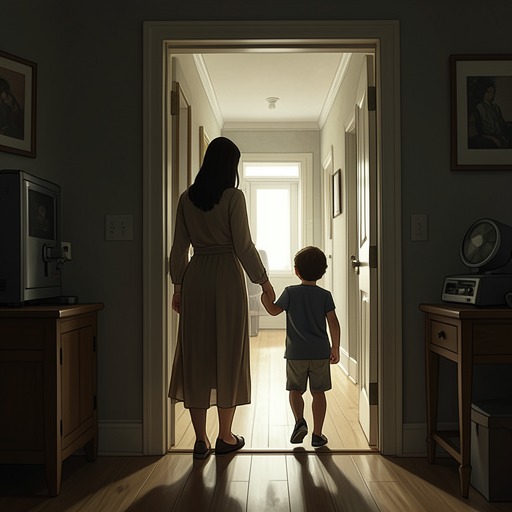
A reader asks Sugar for a specific example of how becoming works across a life: how something’s eventual meaning cannot be known in advance. Sugar answers with a scene from the month before her nineteenth birthday. She is browsing with her mother through the remnants of another person’s life when she sees a red velvet dress trimmed with white lace, sized for a toddler. She lifts it for her mother to admire, sets it down, and then keeps returning to it. A square of masking tape near the collar marks its price as one dollar.
At this point Sugar believes she will not have children. She regards children as appealing but ultimately annoying, and wants a life with other possibilities. She is about to turn nineteen; within a year she will be married. Looking back, she also knows that in three years she will stand in a meadow near the yard where she saw the dress, holding her mother’s ashes. These future facts frame the scene for the reader, but they are not knowledge Sugar possesses while making her choice. The contrast between what the retrospective narrator knows and what her younger self can imagine gives the encounter its quiet tension.
The dress does not arrive as a deliberate plan for motherhood. Sugar cannot explain why it draws her, and stresses that no external force compelled her to want it. Her mother asks whether she wants it; when Sugar objects that she is not going to have children and says she has no dollar, her mother offers to pay. The mother’s answer is practical rather than prophetic: the dress can be put away, so Sugar can keep it whatever she eventually decides. The exchange preserves the uncertainty instead of resolving it.
Keeping the Dress
Sugar puts the dress in a box inside a cedar chest that belongs to her mother. She carries it through her twenties and into her thirties, through changes that the young woman in the yard could not have mapped: she has a son and then a daughter. For years the dress remains a secret known only to Sugar, buried among her mother’s best things. Its long storage gives the object a peculiar status. It is kept, but not yet interpreted; it travels with Sugar while its eventual place in her family remains unknown.
The story makes the passage of time part of the object’s meaning. The dress does not change the course of events, and the account does not claim that Sugar’s early attraction foretold that she would become a mother. Instead, its survival allows two different moments to meet: the day when her mother bought it, and the later day when Sugar uncovers it after having children. The box holds a possibility without requiring Sugar to commit to it. What seemed unnecessary to explain at nineteen becomes legible only after life has supplied circumstances she could not then imagine.
Loss, Inheritance, and the Daughter
When Sugar finally takes the dress from the chest, the discovery brings incompatible feelings together. It is evidence of loss because the mother who bought it will never know the granddaughter who can wear it. At the same time, the mother’s choice has endured beyond her life: Sugar has carried the dress forward, and her daughter can receive a gift chosen for her before her birth. The same object therefore makes absence tangible and gives love a form that continues into the next generation.
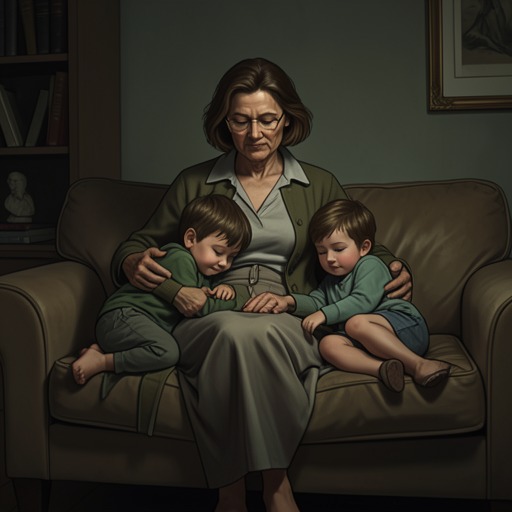
Sugar is careful not to make the daughter the exclusive bearer of her mother’s memory. Her mother lives as brightly in Sugar’s son as in her daughter; the connection is not secured by gender or by the dress. Yet seeing her daughter wear it on the second Christmas of her life gives Sugar a particular, difficult-to-verbalize feeling. The account sets two plain facts beside each other: a grandmother bought a dress at a yard sale, and her granddaughter later wore it. For Sugar, the ordinariness of that family scene is precisely what makes it extraordinary. The dress’s meaning is intimate, not a universal property of the object.
The Ordinary Miraculous
The title The Ordinary Miraculous names a recognition that comes after the fact. Sugar says people live, have experiences, leave people they love, and are left by them; people expected to remain may be lost, while people not yet known may enter their lives. The shape of a life therefore exceeds what can be understood from any single moment. The dress offers a concrete example: an unexplained desire, a mother’s small act of generosity, a death, and a daughter’s birth eventually form a connection that none of those moments disclosed on its own.
The image of putting something in a box and waiting expresses patience with unfinished meaning, not a promise that every loss will be repaired or every question answered. Sugar’s point is that significance can emerge through living, and that a person need not understand an experience fully while it is happening. In a related reflection, she names the seemingly useless days—the waitressing jobs, journal-writing, walks, and hours spent reading—as part of becoming. The emphasis falls on accumulation: a life is made not only of events recognized as important at the time, but also of ordinary stretches whose contribution appears later.
The dress brings that idea down to the scale of a household object. Its first appearance is brief and its price modest; its later force comes from the specific people and losses connected to it. Sugar does not turn this retrospect into certainty about what the future had in store. Rather, the story preserves the distance between what her younger self wanted, what her mother could offer, and what the dress came to mean after both death and birth had altered the family. The ordinary miraculous is that, years later, Sugar can stand before her daughter in the dress and recognize a meaning that neither of them could have known when it was bought.